
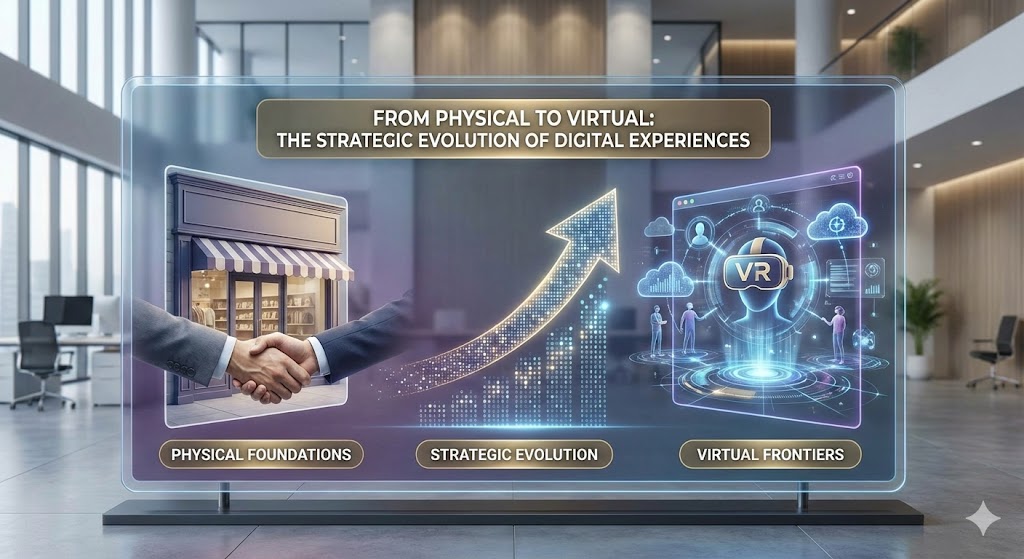
People have significantly changed how they use technology in recent decades. What started as simple websites and basic tools has grown into interactive spaces. These environments mix physical and virtual realities. The move from physical to virtual experiences didn’t happen overnight. It’s due to new tech, shifting user habits, and a need for closer digital connections.
Today, digital experiences are no longer limited to screens and clicks. They are becoming more social and immersive. Now, users can work, learn, shop, and socialize in new ways. Understanding this change is key to seeing the future of digital ecosystems. It shows how they can transform industries, economies, and daily life.
The Early Phase: Digitizing the Physical World
The first phase of digital evolution aimed to copy physical processes digitally. Businesses now use websites to share information. Email has taken the place of traditional communication. Early software helped automate manual tasks. The goal was efficiency—making physical workflows faster and more accessible.
During this stage, digital experiences were largely transactional. Users interacted with interfaces designed for function rather than engagement. A website was just a place for information. Online tools served as digital substitutes for physical processes.
This phase set the stage for modern technology. But it had limited interaction and personalization. The digital world was separate from the physical one, and user engagement was passive.

The Rise of Interactive and Experience-Driven Digital Platforms
Digital experiences shifted from static to interactive. This change happened as internet speeds increased and devices became more powerful. Social media, mobile apps, and cloud services changed how we connect and interact with content.
This era introduced real-time interaction, personalization, and community-driven platforms. Users were no longer consuming content—they were creating it. Digital experiences became more dynamic, social, and user-centric.
Businesses began to focus on user experience (UX). They realized that engagement was as important as functionality. But, even at this stage, most interactions still occurred within two-dimensional environments.
Immersive Technologies and the Move Toward Virtual Spaces
The next big change came with immersive technologies. These include virtual reality (VR), augmented reality (AR), and mixed reality (MR). These technologies let users enter digital spaces instead of watching them.
Virtual spaces introduced new possibilities:
- Presence instead of participation
- Interaction instead of navigation
- Experiences instead of interfaces
This shift changed how we design and enjoy digital experiences. Users can explore environments and interact with digital objects. They can also connect with others in shared virtual spaces. This is better than clicking through pages.
The Strategic Shift: Why Virtual Experiences Matter
The move from physical to virtual experiences isn’t about technology. It’s a strategic change shaped by shifts in behavior and expectations.
Changing User Expectations
Modern users expect seamless, engaging, and personalized experiences. They want digital interactions to feel intuitive, social, and immersive. Static tools no longer meet these expectations.
Global Accessibility
Virtual environments remove geographical limitations. People can work together, join events, or use services from anywhere. This makes digital experiences more inclusive and easier to scale.
Digital Identity and Ownership
Virtual experiences introduce new forms of identity, expression, and ownership. Avatars, digital assets, and virtual spaces let users express themselves beyond physical limits.
Organizations and platforms are transforming the way they create and share digital experiences. This shift is due to several factors.
Key Technologies Driving the Evolution
Several core technologies are enabling the shift from physical to virtual experiences:
- 3D Engines and Real-Time Rendering: Power immersive environments with realistic visuals and interactions.
- Artificial Intelligence: Enhances personalization, automation, and intelligent interactions within virtual spaces.
- Blockchain and Digital Assets: Enable ownership, security, and transparency in virtual ecosystems.
- Cloud Computing: Supports scalable, persistent virtual environments accessible from anywhere.
- Spatial Computing: Bridges physical and virtual spaces through context-aware digital interactions.
These technologies create the foundation for advanced virtual platforms and metaverse solutions.
Applications Across Industries
Digital experiences are changing many sectors. Each one uses virtual environments in its own way.
Education and Learning
Virtual classrooms, simulations, and interactive training environments enhance engagement and understanding. Learners can experience complex concepts rather than read about them.
Work and Collaboration
Virtual offices and collaborative spaces let teams meet, brainstorm, and work from anywhere. This redefines remote work beyond video calls.
Retail and Commerce
Virtual showrooms and immersive shopping let customers view products in real-life settings. This helps them make better buying decisions.
Healthcare
Virtual simulations help with training, therapy, and patient education. They provide safe and controlled settings for complex procedures.
Entertainment and Social Interaction
Gaming, virtual events, and digital communities offer shared experiences. They go beyond just watching content.
Impacts of the Shift from Physical to Virtual
First, we should see the wider effects of this change. Then, we can understand the benefits.
Redefinition of Presence
Presence is no longer tied to physical location. Being “there” now means being digitally present in a shared environment.
New Economic Models
Virtual economies and digital goods offer fresh ways to create and trade value.
Skill Transformation
Designing, managing, and interacting within virtual environments requires new skills, reshaping workforce demands.
Ethical and Social Considerations
As virtual experiences grow, privacy, accessibility, digital well-being, and inclusivity matter more.
These impacts show that evolution isn’t about technology. It also involves social, economic, and cultural changes.
Benefits of Virtual and Immersive Digital Experiences
The shift toward virtual experiences offers several long-term benefits:
- Enhanced Engagement: Immersive environments capture attention and encourage deeper interaction.
- Scalability: Virtual platforms can grow without the physical limitations of space and resources.
- Cost efficiency: reduced need for physical infrastructure, travel, and materials.
- Innovation Opportunities: Virtual spaces allow for experimentation without real-world risks.
- Inclusivity and Reach: People from different regions and abilities can take part equally.
More people are drawn to advanced digital ecosystems and metaverse development. These benefits explain why.
Challenges and Considerations
Despite the advantages, the evolution from physical to virtual experiences presents challenges.
- Technical complexity and high development costs
- Accessibility issues related to devices and connectivity
- Data privacy and security concerns
- User fatigue and overexposure to digital environments
Addressing these challenges requires thoughtful design, ethical frameworks, and responsible implementation.
The Road Ahead
The evolution of digital experiences is ongoing. Physical and virtual worlds aren’t replacing each other. They are becoming more connected. Hybrid experiences that mix real and virtual worlds will shape the next phase of digital interaction.
As technologies grow, the focus will change. It will shift from new and exciting to a focus on usability, sustainability, and real value. Virtual experiences will thrive not for their immersion. They will succeed because they address real problems and strengthen human connections.
Conclusion
The move from physical to virtual is a big change in making and sharing digital experiences. What started as basic digitization has changed into immersive, interactive ecosystems. These ecosystems redefine how we experience presence, engagement, and value.
This shift impacts industries, societies, and individuals. It brings new opportunities but also adds new responsibilities. Grasping this evolution is key to shaping our digital future. In this future, virtual experiences won’t replace reality; they’ll enhance it.
As digital ecosystems expand, we should rank smart design, ethics, and long-term effects. This matters more than chasing fleeting trends. Only then can virtual experiences truly enhance the way we live, work, and connect.